

Delivering Deepwater LNG Operations Through Capability, Trust, and Inclusive Leadership
Far offshore, where the ocean stretches endlessly and machinery hums in rhythm with the waves, PETRONAS’ PFLNG Dua operates at the frontier of deepwater energy. Onboard its second floating liquefied natural gas (FLNG) facility, operations engineers Toh Ke Jing, Lim Chin Chee, and Nur Izzati Ishak exemplify how leadership, decision-making, and accountability take shape in one of the industry’s most demanding offshore environments.
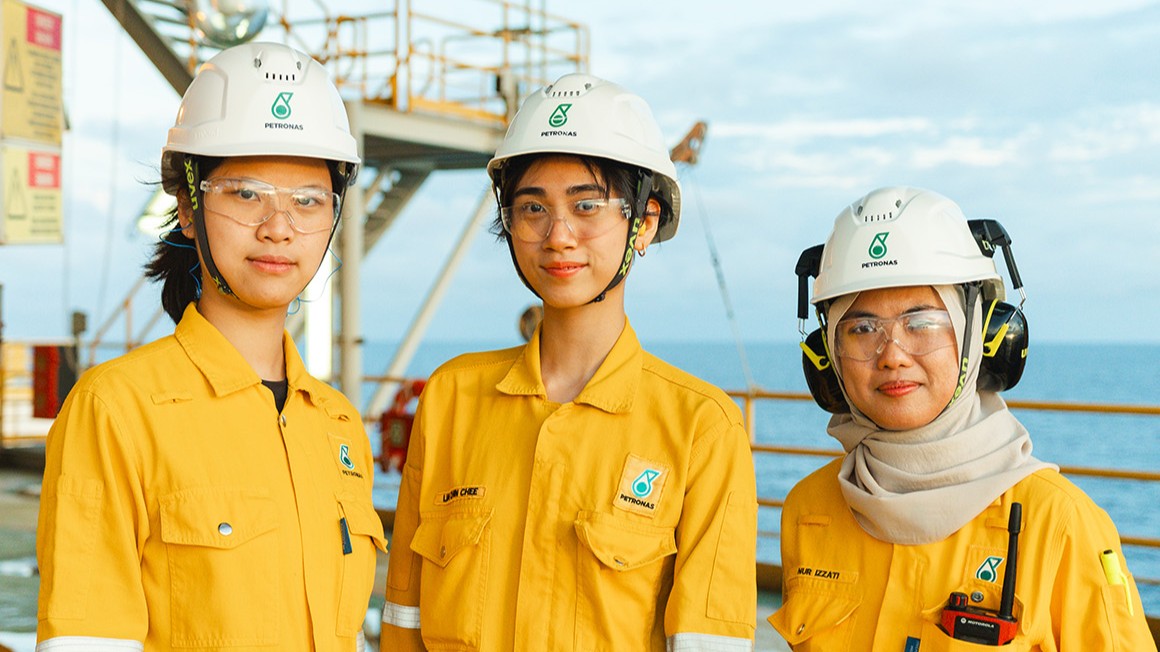
From left: Toh Ke Jing, Lim Chin Chee, and Nur Izzati Ishak, female operations engineers onboard PFLNG Dua.
Their presence reflects how PETRONAS develops and entrusts women engineers to lead, make decisions, and operate confidently in one of the world’s most demanding offshore environments.
Hailing from Johor, Selangor, and Sabah respectively, the three engineers began their journeys with a shared love for science. Supported by PETRONAS education sponsorships, they pursued chemical engineering overseas before returning home with a clear purpose: to contribute meaningfully to Malaysia’s energy future.
“I’ve always loved mathematics and science,” said Ke Jing. “When the opportunity came to apply it in the real world, I didn’t hesitate.”
“I didn’t want a desk job,” added Izzati. “I wanted to be where decisions are made in real time.”
For Chin Chee, witnessing Malaysian engineers take the lead during commissioning became a defining moment. “That inspired me to keep growing,” she said.
Their first days offshore were anything but ordinary. Ke Jing battled seasickness while learning to stay focused on the job. Izzati walked straight into a plant blackout on her very first shift, where decisions had to be made quickly and calmly. Chin Chee joined during a high-pressure commissioning phase, when margins for error were slim. Each challenge demanded rapid learning, sharpening their technical instincts and building confidence through experience in one of the industry’s most demanding offshore environments.
The Scale of Responsibility Offshore
Operating offshore means carrying responsibility where every decision directly affects safety, reliability, and the people around you. Engineers work closely with a multidisciplinary crew of typically 60 to 100 people, ranging from control room technicians and maintenance teams to marine specialists and safety officers, where trust, communication, and sound judgement are critical.
Commissioned in 2021 and operating at the Block H Rotan gas field approximately 140 kilometres off the coast of Sabah, PFLNG Dua is a complex deepwater FLNG facility that places engineers at the front line of high-stakes operations.
Alongside PFLNG Satu, PETRONAS’ first FLNG facility, PFLNG Dua plays a critical role in unlocking remote gas reserves. For engineers like Ke Jing, Izzati, and Chin Chee, this scale translates into daily accountability, where technical decisions must balance operational integrity, safety, and environmental responsibility.
A Shared Milestone at Sea
In mid-May 2025, PFLNG Dua achieved a major operational milestone with the completion of its 100th LNG cargo, transferred via floater-to-ship loading to the LNG carrier Seri Cemara. For the three engineers, witnessing the moment together was a powerful reminder of how far they and the team around them had come.
“To stand on deck and watch that 100th cargo leave our floater was powerful,” said Chin Chee. “It reminded us how far we’ve come, not just as engineers, but as a team.”
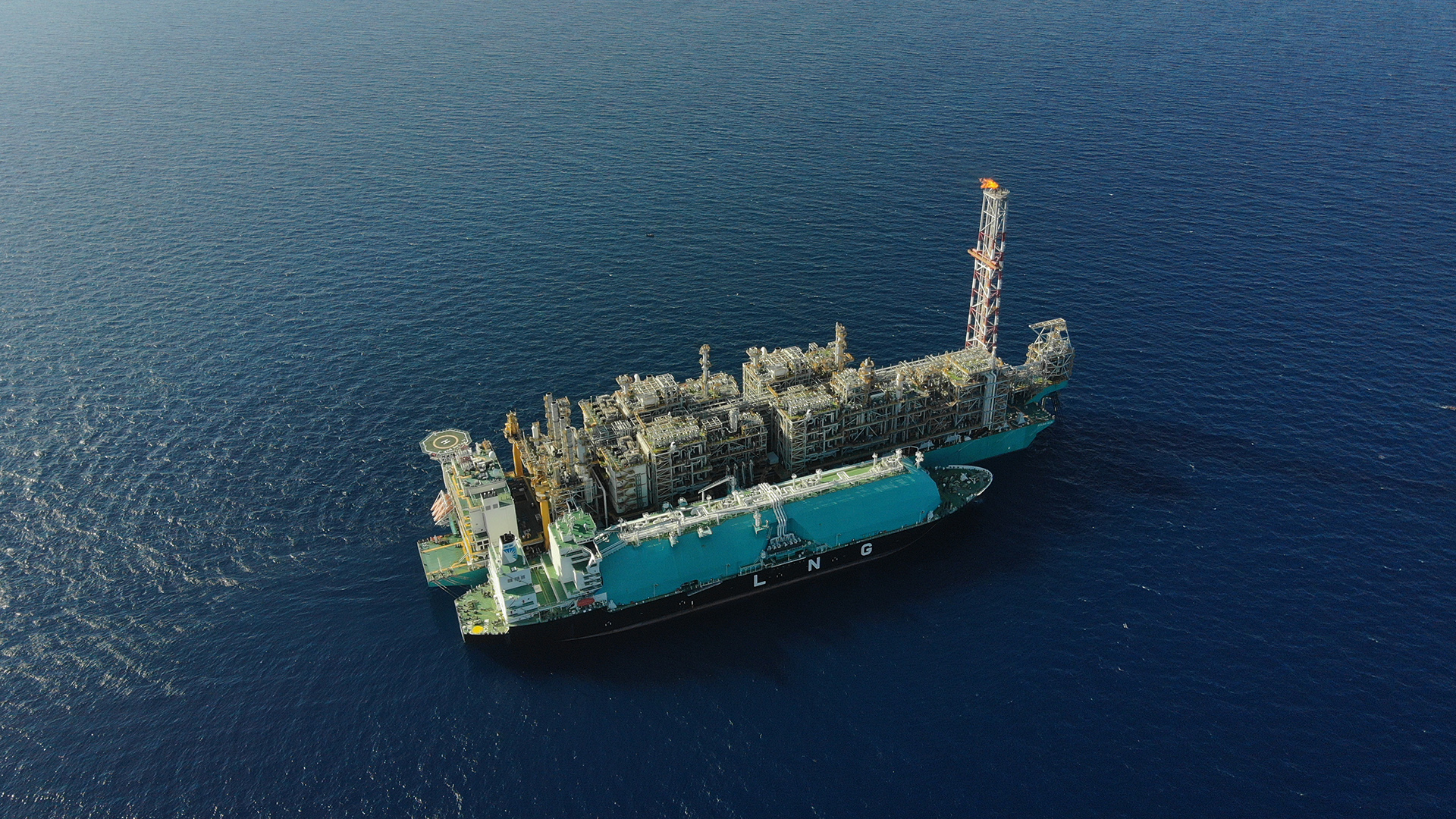
PETRONAS’ PFLNG Dua loads liquefied natural gas onto an LNG carrier, far off the coast of Sabah.
Beyond the numbers, the milestone symbolised shared ownership; a moment where the engineers could see the tangible impact of their vigilance, teamwork, and decisions at sea.
Life Across Shifts and Shorelines
A typical offshore day begins with a structured morning briefing, or toolbox meeting, but unpredictability is the norm. Equipment alerts, process upsets, and changing sea conditions demand immediate problem-solving, technical expertise, and calm leadership.
While most crew members work fixed 12-hour shifts, operations engineers remain on standby around the clock. Their rest and sleep cycles revolve around real-time plant conditions and require constant readiness.
“We usually come offshore for about two to three weeks, then return onshore for off-days and reporting,” said Ke Jing. “It’s an intense cycle, but you adapt. Over time, your cabin becomes your home, and the platform becomes your world.”
During onshore periods, engineers may also report to the Remote Operations Centre (ROC) at the PFLNG office in Kota Kinabalu for handovers or follow-ups. Serving as the onshore nerve centre for both PFLNG Satu and PFLNG Dua, the ROC enables real-time monitoring and close coordination between offshore and onshore teams.
“Offshore keeps you on your toes,” said Izzati. “When something goes wrong, you’re solving real problems that affect the entire plant. It’s intense, but it’s empowering.”
An Inclusive Culture Offshore
Sustaining such intensity offshore requires more than technical excellence. It requires a culture that supports everyone onboard.
“From day one, I’ve been treated with respect. When I speak, I’m heard,” said Ke Jing.
“It’s not about being the only woman,” added Chin Chee. “It’s about being part of the team.”
PETRONAS’ commitment to Diversity and Inclusion is anchored in the belief that strong organisations are built through merit, trust, and the collective strength of diverse perspectives. Initiatives such as the PETRONAS Leading Women Network (PLWN) support this commitment by strengthening leadership capability, expanding access to development opportunities, and fostering inclusive dialogue across disciplines and levels.
Onboard, practical measures including women-fit offshore coveralls, ensure safety, comfort, and performance are never compromised. Together, these efforts reinforce an environment where female engineers are not exceptions, but trusted professionals integral to operational excellence.
Looking Ahead
With global LNG demand projected around 600 million tonnes annually by the early 2030s, Malaysia is positioning itself at the centre of Asia’s evolving energy landscape. PETRONAS aspires to be at the forefront of innovation, reinforcing its role as a trusted and reliable LNG supplier. Building on the proven success of PFLNG Satu and Dua, PETRONAS is currently developing a shore-based FLNG facility, targeted for commissioning in the second half of 2027.
Facilities like PFLNG Dua depend not only on advanced technology, but on a resilient and capable workforce operating at the front line. Engineers like Ke Jing, Izzati, and Chin Chee play a hands-on role in driving operational efficiency, managing risk in real time, and supporting PETRONAS’ aspiration to achieve net zero carbon emissions by 2050. Their work underscores a simple truth. Even in highly automated environments, human judgment remains essential.
Amid long shifts and demanding conditions, they stay grounded through fitness activities, and friendships forged through shared responsibility. These small rituals sustain focus and morale far offshore.
“No matter how rough the waters get, the floater stays steady,” Ke Jing reflected. “That reminds me to do the same.”
Together, the engineers exemplify the environment PETRONAS continues to build, one where capability, trust, and responsibility shape the next generation of energy leaders.
“Steel spirit and a soft heart. That’s what it takes,” said Izzati.
“Don’t let stereotypes define your path,” Ke Jing added. “We belong here, in control rooms, on deck, and in every decision that matters.”
Chin Chee concluded, “Work hard, stay grounded, and never underestimate what you bring to the table.”
As PFLNG Dua continues to operate at the frontier of deepwater energy, PETRONAS remains focused on strengthening the systems that underpin safe and reliable operations. The future of energy is shaped by infrastructure, technology, and operational discipline, sustained by engineers operating at the front line, including women, and entrusted with critical decisions every day.